Why does the water alway feel so damn cold, even though it isn’t, you’ll feel perfectly warm after you’ve been in it for a few minutes?
Evolution seems to have rendered us skeptical about immersion. Phase changes. Slipping back and forth across that aquatic boundary layer. Piercing the surface tension.
But oh, when you adjust, and your stupid skin stops shrieking, you are weightless and free and your nose does seem to be evolved for this space, nostrils pointed away from the flow as you pull your way through the water.
So this is just a quick note to let those who care about such things know that I am under water again, in the secondary creation after a few months shying away from that first blast of cold, mourning the end of the last project, in that time between when one wonders if one will ever do this thing again.
And finally you let yourself dive in, and finally you realize you’ll be swimming to the day you die, and how did you forget, that you are weightless here? How did you forget, that the water grows warm and your muscles loosen up and your sinuses get weirdly clear, and the sun on your back when you emerge feels wonderful?
Oh, I am having a lovely time, I wish you were here, and maybe you will be after the few weeks of work, followed by the one to twelve months of marketing, followed by the months to publication and distribution. Say a year or two.
Meanwhile last years output slowly winds through the system. Hope you get to see some more of that, too.
But you’re the greek chorus really.
Though I wouldn’t dream of doing this without you, either.
So the job inside your head isn’t really a job job, because it doesn’t pay enough, at least, not at first and oftentimes not ever.
But it isn’t a hobby.
Why isn’t it a hobby? Well, for one thing the word hobby is insulting, a word invented by capitalism to make fun of activity it has difficulty monetizing.
The job inside your head is harder than a hobby, oftentimes impossible to quit, but infinitely easier to avoid for long blocks of time.
The job inside your head drags everything into a big barn labelled ‘raw material,’ and then doesn’t know how to file any of it. As you age the barn fills with old magazines, broken typewriters, antique furniture, dead media, floppy disks and analog tape and zip drives and stacks of vinyl warping in the mildewed air. And box after box after box of unlabeled, uncategorized snapshots.
The job inside your head is a welcome relief from your job anywhere else. The job can also be nerve wracking. It’s easiest when you pretend that you’re really, really good at it. But you never get any better when you think that way too much.
And when you never get any better, what starts in your head mostly stays in your head.
Because the goal of the job inside your head is to make things that make the difficult and dangerous journey into other heads. And having penetrated that quarter inch of bone and skin and membrane, like Trojan horses or IEDs or Vaccines or Opioids, your head-made-thing detonates. Blooming into stuff that matters. Stuff that gets dragged into the barns inside those other heads. Tucked into a section that isn’t for raw materials but is instead loosely regarded as inspiration.
Or joy. Pure joy.
So let us leave the here and now and go to work, or forget to work and just be in that place for a time where the work piles up undone, just mist, ghosts and shadows and briefly glimpsed vistas of glittering starscapes, sweat slicked gleaming bodies, expanding spheres of quiet destruction, mushroom clouds and armies marching over shattered obsidian.
Rebels languishing in caves of methane ice. Silent generation ships shepherded by orbs of crystalline computronium dreaming incomprehensible dreams. Chosen Ones and Everyman. Men. Persons.
Tigerfaced Gully Foyle scattering capsules of anarchy across all spacetime.
The black hole lurking behind nebula at the center of the Galaxy, devouring all things.
The Instrumentality punishing Command Suzdal with eternity in Shayol.
The velvet black sky full of whispering stars.
Dark interdimensional spiders aghast at the race that would rule the sevagram!
A pulp magazine. A light saber. A rubber mask. One ring.
A particle beam handgun with a worn ivory handle.
Pack them in your briefcase. Finish that cup of coffee!
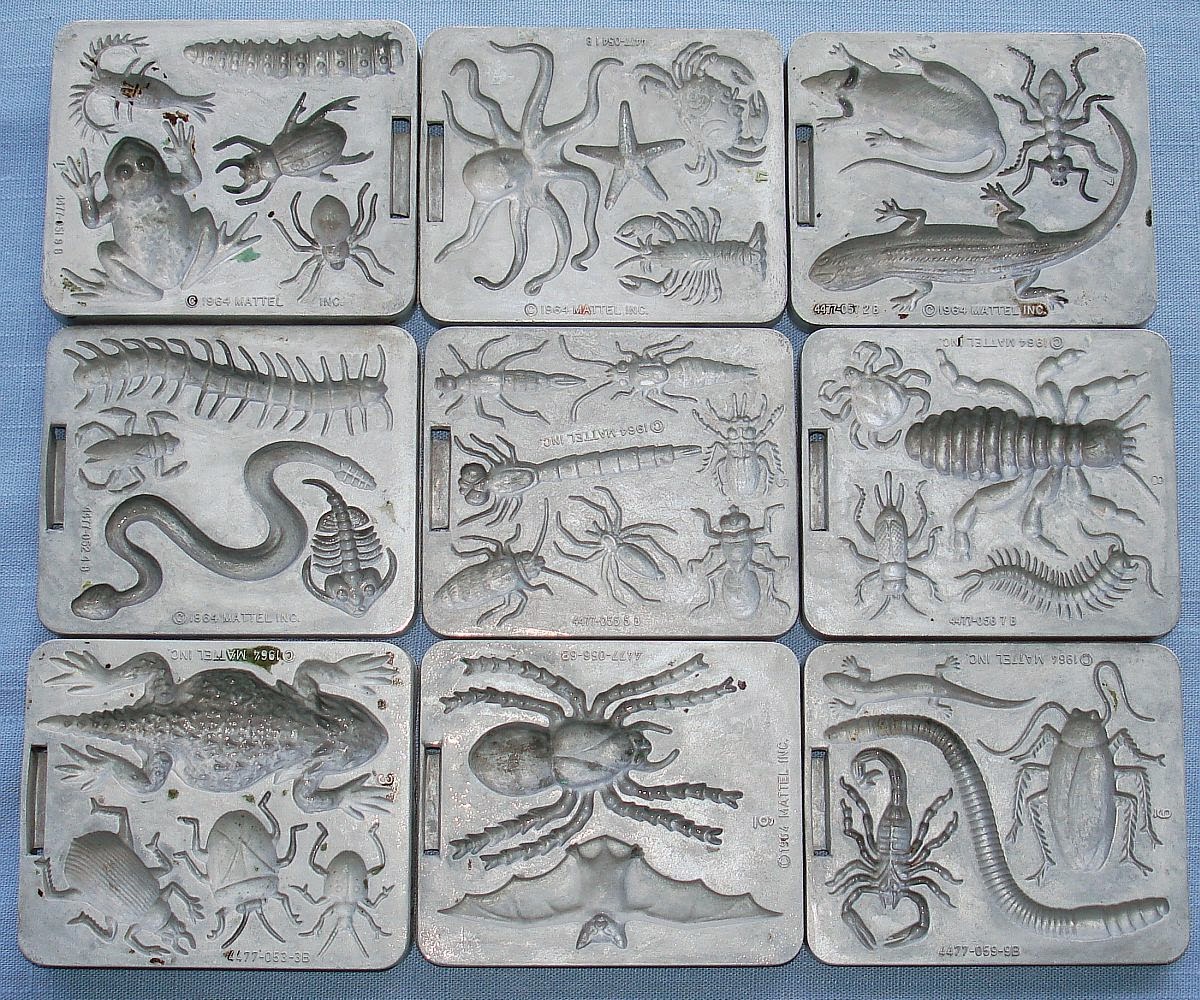
The metal molds that came with the toy Creepie Crawlies, a searing hot, plastic bug spawning foundry toy from the sixties that I coveted dearly.
In the immersive, wrap-around staging of the play Natasha, Pierre and the Great Comet of 1812, a truncated War and Peace sings all around you, while at the middle, in a little alcove, a middle-aged Tolstoy sits and watches and scribbles in a notebook.
He’s the writer, at the center of life, an omniscient perspective, old enough to fear death and decline, but young enough to remember passion and primary colors.
Not one thing or the other; barely in the story, there for a moment to witness, understand, forgive, pity and envy the characters swirling around him.
So you’re the writer; you have at best as many conscious years ahead as behind, and the milestones ahead are greasy with despair. With the occasional hopeful beacon. A grandchild? Some professional accomplishment, perhaps?
Time to get writing, friend.
So you grow up and grow older and one day you find yourself wanting to buy all the toys your parents never bought you. Read the books and do the things and visit the places and eat the food and drink the drinks that were passed over, discouraged, forbidden or forgotten.
Sexual maturity is one of the first of these toys you take for yourself (God, if you’re lucky) and eventually autonomy of every kind. To eat and drink and drug and work and sleep the way you see fit.
But the toys you were never given, you can never get… those toys were needed by a version of you that isn’t any more. Buying them now doesn’t work. If anything it excites that nameless ache. The sense of something missing which is perhaps the essence of life.
Still. People do it. They can’t help it. They seek these things out. They threw them out, or their mother did, with or without permission or they never had them but a neighbor did, a friend did, a person they secretly loved had the entire set, you had one, too, for a week but then your brother broke it.
And it was never replaced.
I grew up in the age of Television, Movies, Radio and print. And print was full of these mosaics of tiny ads, mostly horrific frauds of one sort or another (x-ray specs; one dollar submarines.) But some were just things that hadn’t shown up in your toy store, or they were old toys that had been discontinued.
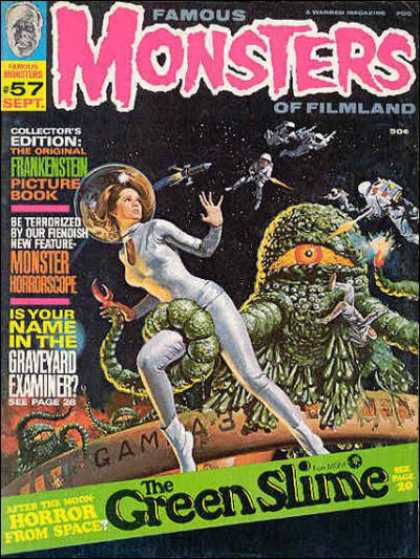
I came of age in the time of the monster on the cover trying to get it on with the hot woman… Um. In our defense we didn’t make these covers. We just looked at them. For hours and hours and hours. And as little kids had no idea what was going on.
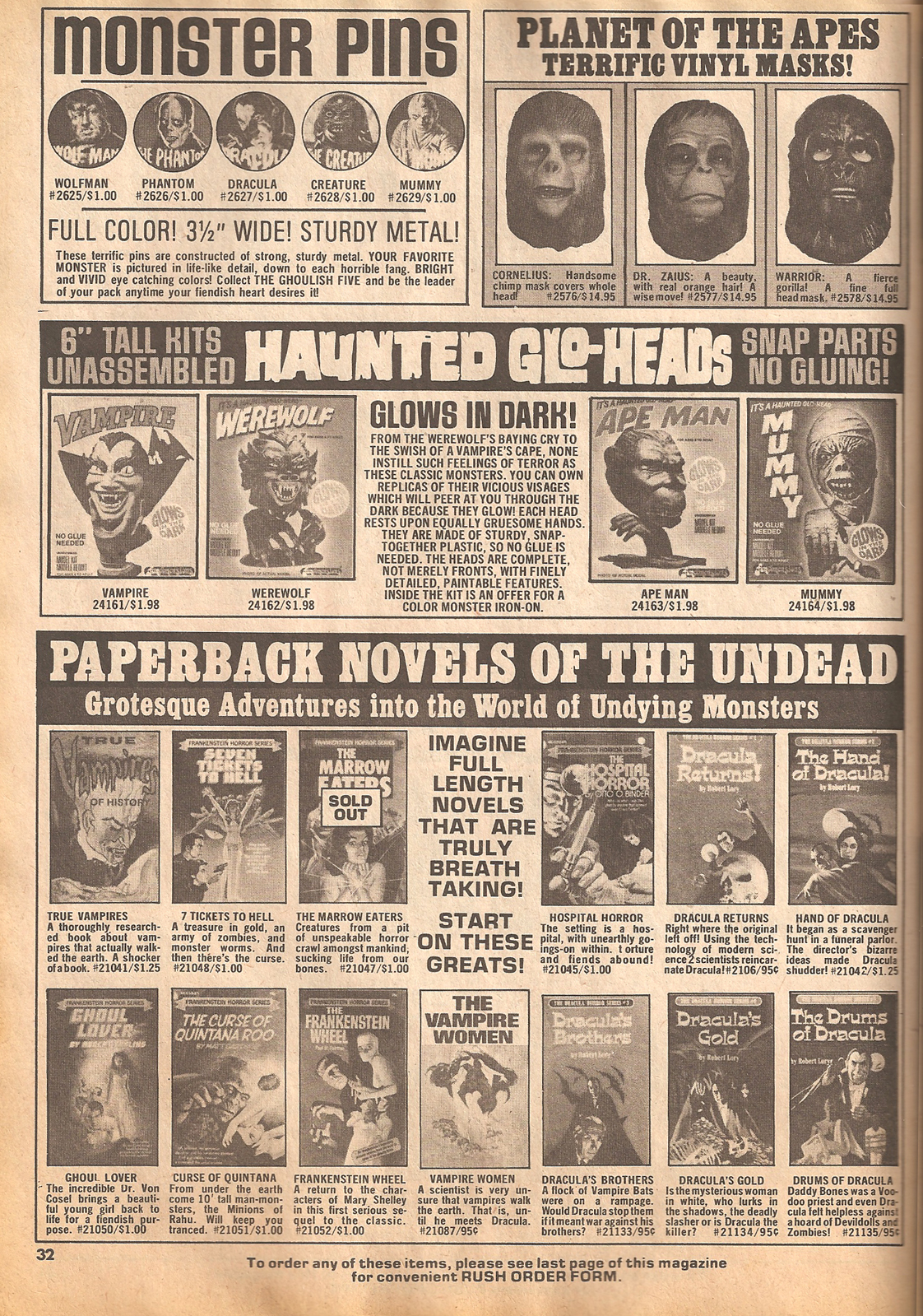
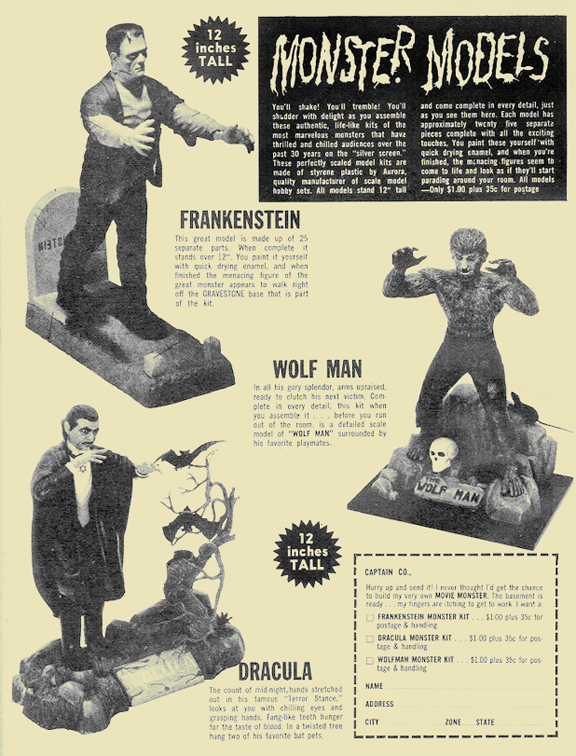
Famous Monsters issues hung around for decades in pleasantly moldering stacks in the bargain basements of bookstores, sometimes with covers half torn off, and they were filled with tiny grids packed with strange objects of desire.
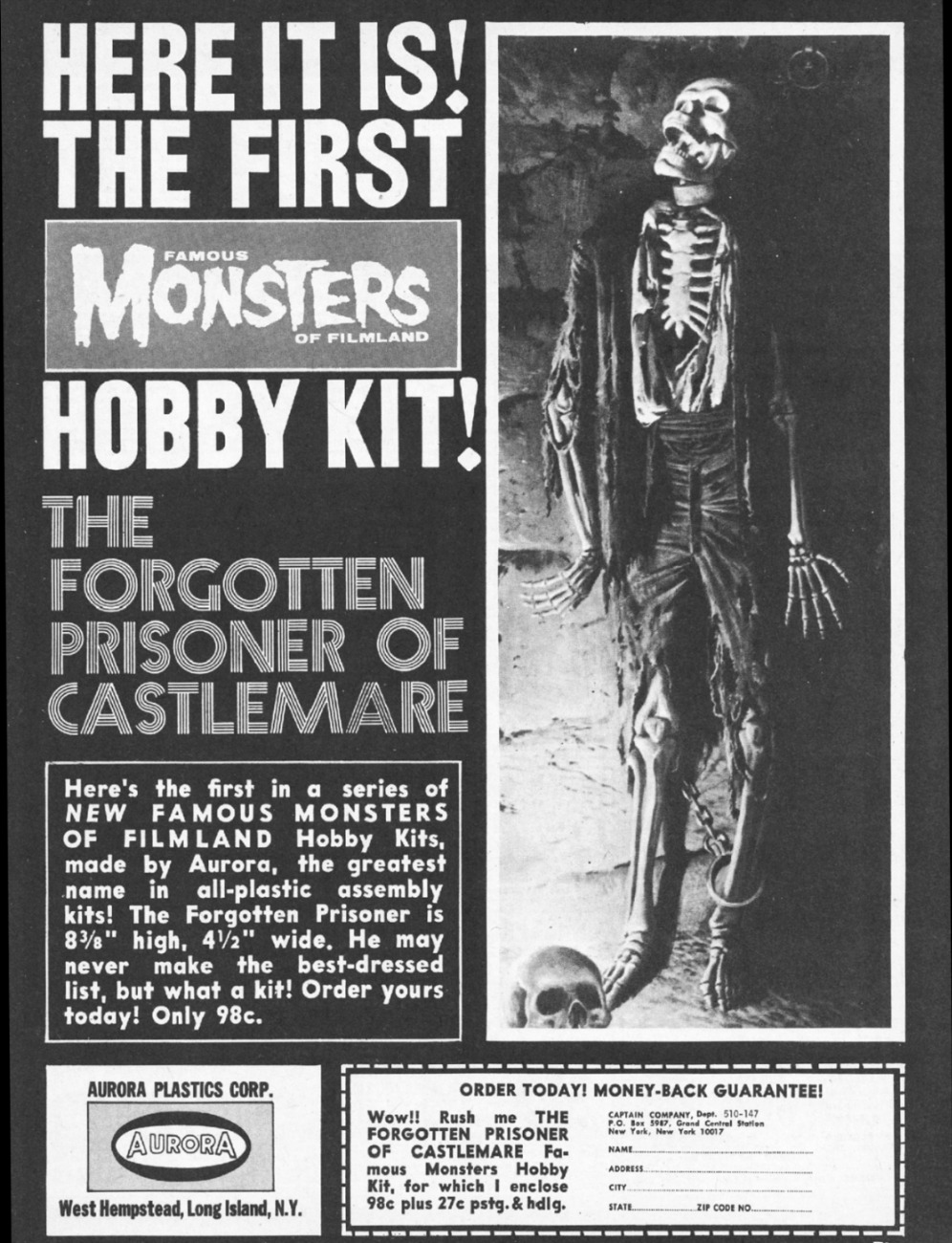
I did own the Forgotten Prisoner…
Grotesque adventure? What? Vampire Women? What the hell is going on with these things? I never saw them…
The black and white Universal Horror movies were the first monsters we knew and loved. I had this Frankenstein model, which came with glow in the dark optional head and hands. I never painted these but used the glow in the dark components and would charge them up in bright sunlight and then lock myself in the closet to watch them radiate. A soft, nacreous sickly green you grew used to. Every glow in the dark thing was the exact same color.
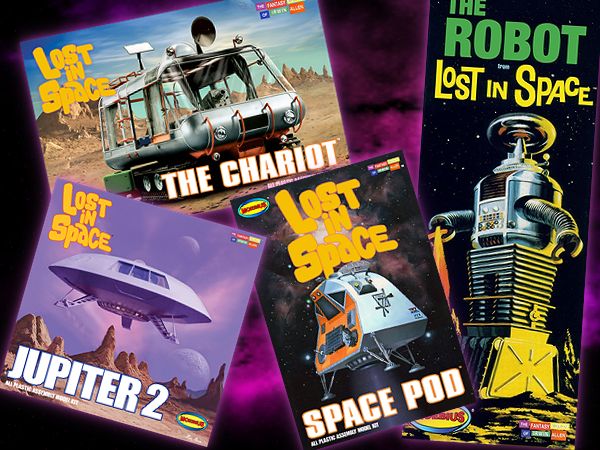
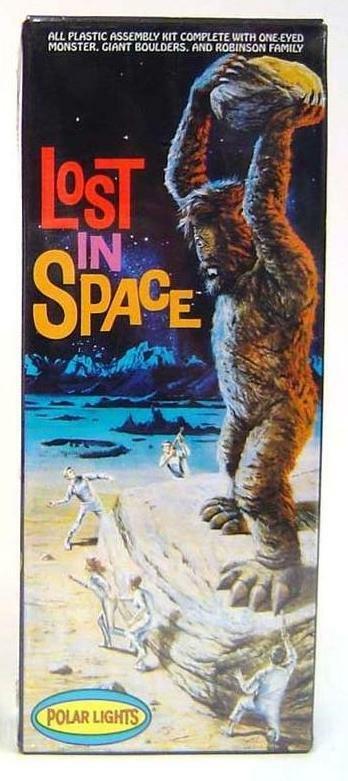
Lost in Space was poorly syndicated in central New York in the sixties and seventies, and my unmet desire to see the show manifested in daydreaming about the these three models; the saucer shaped Jupter 2, Television’s knock off of Robbie the Robot from Forbidden planet called imaginatively, Robot, and the Chariot, a treaded fishbowl that for some reason excited me tremendously.
I never owned any of these.
But sooner or later, the toys and the TV shows and the movies and the ads lead you down a path to the end of childhood, which, if you were born in the sixties looked something like this:
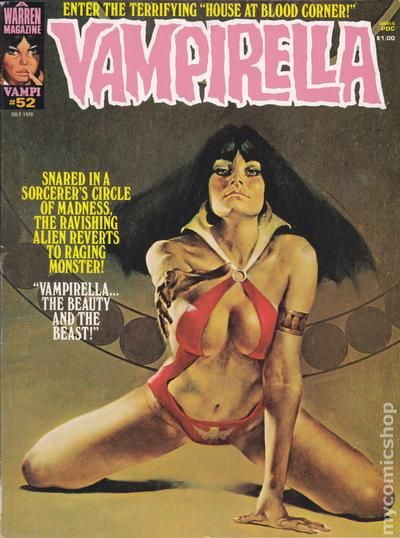
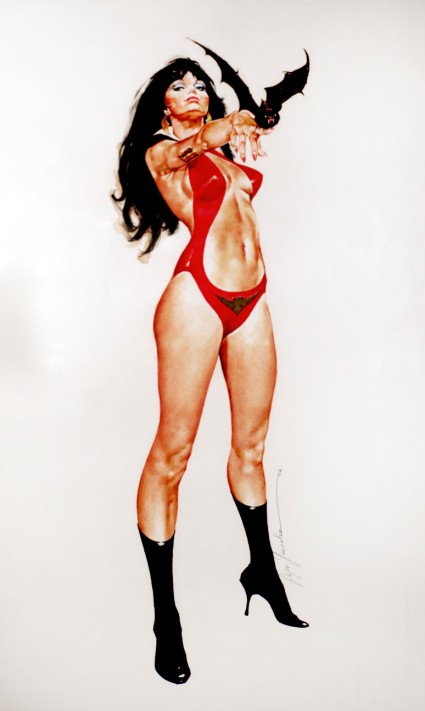
Vampirella lurked at Childhood’s End clad in an impossible crimson bikini kind of thing, with fangs dripping blood staring into your soul with some impossible to decipher emotion.
Sometimes threatening, sometimes being threatened.
The Warren Publication, including EERIE and CREEPY were big, not sold on the comics racks but with the full-sized magazines, and they had black and white interiors.
I have no memory of any Vampirella story. But she looms large in that landscape, gazing through that pre-adolescent haze of inchoate lust.
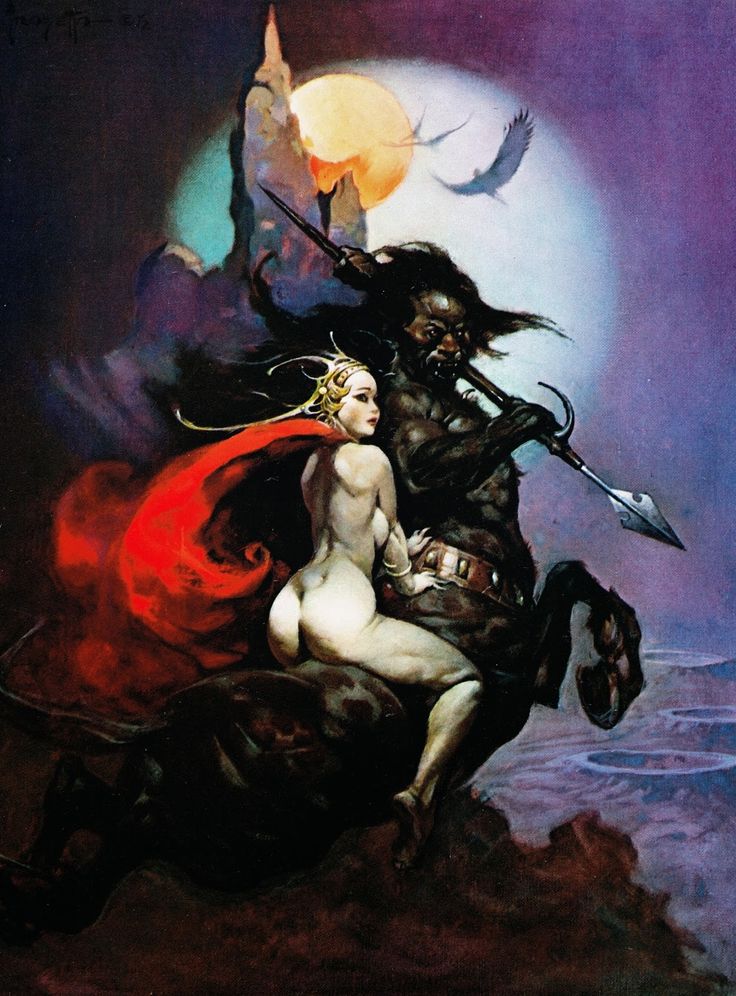
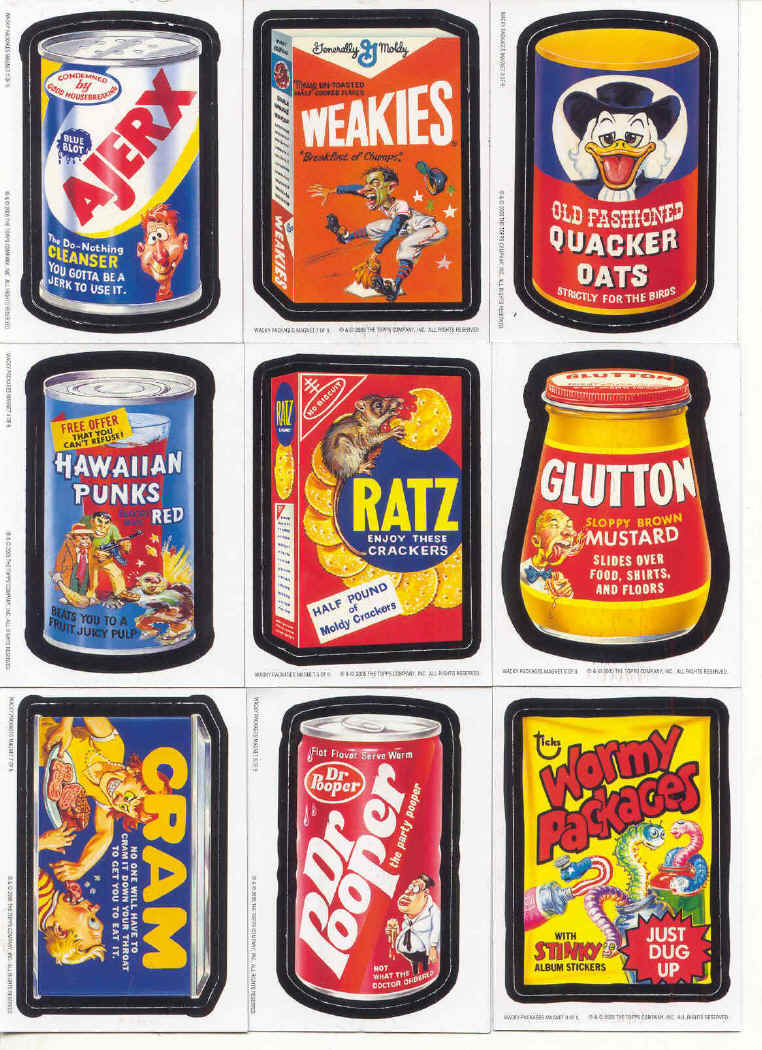
Frank Frazetta’s women were the end of the road. You could still look back, at the candy colored super heroes printed on the giveaway fast food cups, at the legos and action figures and wacky pack sticker encrusted doorway, but… the way ahead beckoned.
Cemetery forts with pony kegs and crimson lipped girls from alien high-schools smoking cigarettes in darkened basements blasting with Led Zeppelin.
Beyond lay the sexist-you’re-soaking-in-it kaliedoscope of Playboy magazine and National Lampoon and late night R-rated soft core and the long hard slog of adolescence. Eventually leaving your toys behind in your parents basement, shedding childhood as if it were some embarassing cocoon as you escaped suburbia and plunged into university or city or apartment or job.
Until finally, like Tolstoy, your own children now fleeing, you remember the acrid tang of annealing plastic, the blackened steel birthing creepy crawlies, the monotone of the Robot, the flashing saucer slicing the sky, the monsters hands and face glowing greenly in the dark, and this crazy hot goth girl that just might eat you alive.
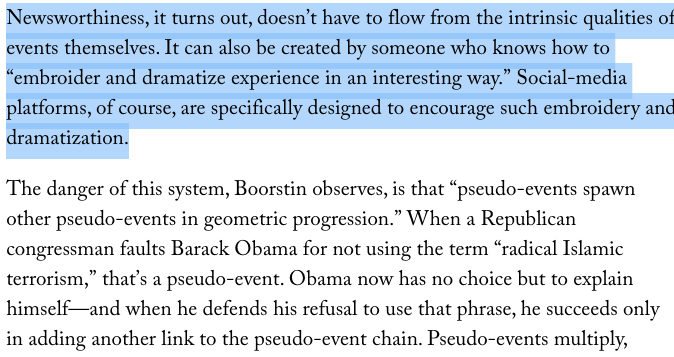
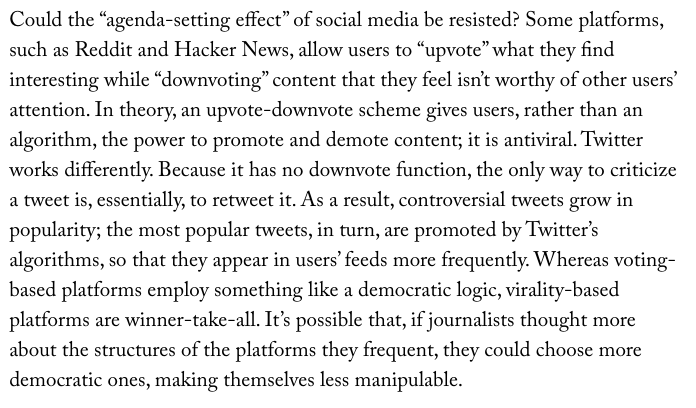
Excellent piece in the New Yorker about the non-event, and to those of us addicted to our feeds, I don’t have to even identify the non-event, but I’ll just say it involves hats. Screenshot excerpt follows:
***
In the old days, there was a little meme, from before we called them memes, that wars start when politicians lie to journalists and then believe what they read in the newspapers.
This seems to more or less completely explain the botched Iraq War 2, or as I call it, the Pre-emptive Unilateral War-of-choice based on Cooked Intel that Created ISIS and Cost More than our Total Debt to China.
I used to say based on lies, but lie is a loaded word, it doesn’t really mean what it means, because it encompasses intent and a kind of self-knowledge that many liars lack.
But it doesn’t exactly explain where we are now. Where genuine grassroots outrage is indistinguishable from viral content created by provocateurs, both foreign and domestic.
But shrieking horrible loathsome men caught up, 99% of the time justly, in the gnashing gears of #metoo have a point. We have created a machine that makes mobs. A kind of destabilizing echo-chamber without gatekeepers.
Progressive have no problem seeing the Mob in gamergate. Our mob is much much better than their mob, I think.
But it’s a mob.
Now the gatekeepers gave us a corrupt status quo, whitewashing racism, sexism, colonialism, all the isms, and all the phobias, homo/trans and xeno. Or, rather the Gatekeepers were part of a status quo that had a degree of corruption in it, and that seemed oblivious to a lot of human misery.
But one has to ask oneself, standing in the ruins of the twitter-fed Arab spring, in the wake of the Trump win, what are the pros and cons of Mobs, and what the hell do we do about the genie we have released from this bottle?
I know how reactionary this all sounds. But know this. I was a techno-utopian, once. I was a cheerleader for the inter-webs.
The far left in America, for a time, believed that the news of Stalin’s purges were fake news by a corporate media in thrall to capitalist imperialism. Regardless of the thrall thing, they were wrong. The purges were real. At some point, some of the left woke up and realized, no, the purges were real, and that while the critique of capitalism made by Marxism had a lot of merit, its prescriptions for Utopia were a complete and total fucking disaster.
This is where I am now with networked technology, information that wants to be free, ‘free’ tools and technologies, digital anonymity— the whole Whole Earth Review Kevin Kelly slash Cyberpunk / Cypherpunk Randian venn overlap of techno utopianism.
Stain’s purges were real. Trump is real. A none-of-the-above social media revolution empowers the biggest organized monster lurking in the shadows.
Which brings us back to the title, and how I escaped Hatgate. (Hategate?) I stopped using the liking and sharing buttons, in the week before Covington.Instead, I wrote a few comments. I sat with choking outrage at the smirk, worrying at some level… that maybe I was being cynically manipulated, because I have been manipulated in this way before.
I wonder now, if writing a comment is like eating a piece of fruit, and if liking and sharing is like drinking sweetened fruit juice, which is fine for some people but a road to obesity and diabetic problems for others. All the white flours which some people tolerate, and which make other people sick.
If you don’t care enough about something to actually talk about it? With words? What the fuck are you really doing by sharing it, and liking it… and maybe not even reading it?
You’re memeing. You’re gossiping. You’re agitating. You’re echochambering. You’re inciting. Like and share is the core of the feedback loop of virality.
Hey what do you call a living thing that grows super super fast, hijacking all available resources, and growing without care for the environment supporting it?
That’s a tumor. That’s cancer.
Like and Share is a tumor machine.
I’m stopping it for now. Or being super judicious (he says) as in linking to the article about non-events above. (he then goes back and reads every word of the article) If I ‘heart’ something I’ll say so with words. If I want to share something, I’m gonna sever the link to the original and embed it in a post I write, that ads some new angle and credits the original authors… let them google up the damn link. Otherwise, people can find the news item… through their own interests.
Maybe even through, gasp, a gatekeeper.
I’m giving up my part time job as a viral agent, and I realize, in so doing, I forfeit my right to become viralized.
Without viralizing, any following I have will grow slowly. Word of mouth that is actually words, and not button presses. Apples instead of applejuice.
I was saved from Covington because I didn’t share it, I was never an agent for whatever created it, and I didn’t distract people from anything real by talking about it, except in this broader context, of saying we have to stop talking about pure outrage fed to us by the outrage machine.
One partial fix, which of course is gameable, is the downvote, which twitter and FB lack. Another excerpt:
***
With the downvote, instead of doubling down on Covington, or parsing it, and talking about it, and feeding it, one could, after getting more context, downvote it.
Downvoting the non-event would be a way of voting for none-of-the-above that isn’t abdicating the slippery moral imperative to vote for the lesser of two evils.
You got scammed by the outrage machine? Fuck that. Downvote is the button we need. All publicity is good publicity? And you tricked me into giving it to you?
Let me knock that bullshit back down to size.
This cranky man resisted click-bait outrage. You won’t believe what happened next!
Doing research for this I discovered the origin for William Burroughs Naked Lunch Monsters. Maybe. Wikipedia doesn’t think so… Remember language is a virus.
Those little red circles with the numbers in them, that top out at 99 on the iphone, but soar upward unbound everywhere else.
How many people have read me, hearted me, shared me, linked to me?
The graphs at the on-line etailers. I just sold five books! I haven’t sold a book in two days!
Your sales rank graph at Amazon, KDP. Your KENP page reads.
The progress of readers at Goodreads. Ten people have added my book. I can see what page some of them are on. I can check each and every review.
The control panels, where you can track your trend lines.
Your twitter followers, your retweets, your FB friends, your Youtube subscribers and views, your mailing list sign-ups… and drops.
Your award nods slowly accumulating at the SFWA site. (if you do SFWA) If you get nods.
“Sure, the world of the future is like a swarm of angry bees living in your head… but there they are,” said Firesign Theater a long damn time ago.
This week I successfully avoided talking about the hats, a reference that may or may not be decodable in the future, assuming there is a future, which seems mostly safe to assume. But not entirely.
I didn’t share the Hat thing, so I didn’t have to apologize about sharing the hat thing or double down on the hat thing or drill into the hat thing to find the deeper truth of the hat thing.
Instead I read my feed without liking, or sharing but occasionally commenting in others threads, congrats and condolences. Brief engagements that spurted way too many words into someone elses comment thread.
A friend asked me to not derail the point of her tweet with a long orthogonal rambling and I deleted my posts and she said she’d be sure not to waste time commenting on my comments again.
Ouch. And mission accomplished, I guess. Unintentional of course, the way I do most things.
There’s no way to interact with the feed that doesn’t entrance you.
The feed is designed to entrance you.
This entrancement is designed to sell things to you.
It is designed to prevent you from selling things to your ‘friends’ —unless you pay for ads.
Your feed is not a publicly regulated utility. It may be entirely composed of lies. If you choose to fill your head with lies and rage, your feed will feed that to you in auto-amplifying waves until you are ready to second amendment whoever it is you are mad at.
Your feed’s author and owners, when warned that their platform were being weaponized, shrugged and said, “that isn’t our responsibility.”
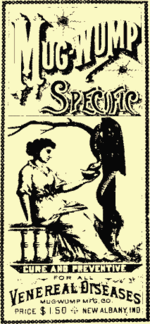
Your feed is a nineteenth century vitamin elixir chock full of opium before the Harrison Act.
What else do billionaires give you, specifically you, for free? I’m not talking libraries built by governments. I’m not talking about soup kitchens or food stamps. Billionaires. Giving. You. Stuff. For. Free.
Nothing. Nothing else. Ask yourself. Why do I get this for free?
Your net search is free, too. Shiver.
TV was free… but the broadcast spectrum was limited. TV was like drinking a six pack a night. Not good for you. But endurable.
Your feed is infinitely large. It scrolls for ever. It is a billion billion channels.
South American native people chewed coca leaves for centuries with harmful effects similar to coffee. Until the leaves were concentrated into powders and the boiled into crack. Becoming more and more concentrated.
The info billionaires are using deep learning and research and all the shiny tools they have from the whole billionaire thing to concentrate your feed and make it ever more entrancing.
You are the product. You make the product. You are the employee. You are the market.
You work in a company store and every interaction makes money for the store owner.
You are addicted to the adrenaline jolt of Now. I’m doing it to you now, too. The irony isn’t lost on me. We’re falling off this cliff together. Have we reached terminal velocity yet?
When will we hit bottom?
But my blog is a backwater, a church basement and a ring of folding chairs. At best I hope to grow into a grainy, hissing channel 2 with PBS and reruns of Monty Python, new to you perhaps.
We’re all mad as hell. But are we going to take it anymore?
Pull up a chair, introduce yourself, and smoke ’em if you got em.
The gaunt middle aged man tosses his smoldering cigarette butt to the floor and twists it out with a sneaker that has seen better days. Looks up at the circle of people sitting in their folding chairs and winces, realizing this was rude. He should have asked for an ash tray.
Really he shouldn’t have been smoking until the first break.
It’s his turn to share.
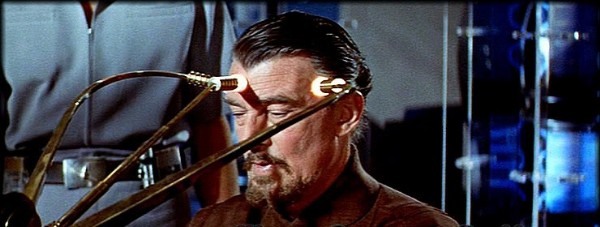
The man clears his throat. “After a million years of shining sanity, they could have hardly understood what power was destroying them.”
He looks around the circle and sighs at the blank stares. He’s the oldest one in the circle.
“Monsters from the id. An old movie. The movie that became Star Trek? Sort of? You know about Star Trek? But you never watched Forbidden Planet…”
The man takes out another cigarette but doesn’t light it, only stares at the unlit tip.
“The movie is based on The Tempest, but the part I’m talking about isn’t in the Tempest. It’s new to the film. Something gained in translation—”
The man is interrupted by a sigh of comprehension from across the circle. “Invisible monsters. That robot that was in all those Twilight Zone episodes! Um,” the woman in her thirties looks at the man, skepticism and compassion at war on her face.
The man nods. “The monsters that destroyed the Krell, the alien species on that planet, were unleashed by tech which set free the darkest impulses of the subconscious. The monsters were thought into being.“
“Oh. So you’re talking about the internet? Social media.”
The man smiles. “I worked in the first tech bubble. I was a believer. I laughed at luddites! A world without gatekeepers would be a better world. A new anarchic, meritocratic, democratic commons. A new marketplace of ideas! A wave of intelligence and compassion lifting all boats. A new golden age…”
The man lights his cigarette and takes a long, deep drag, and closes his eyes. The smoke streams through his nostrils as he smiles.
His eyes fly open and the circle of faces around him flinches as one.
“Guilty! Guilty! My evil self is at that door, and I have no power to stop it! Stop! No further! I deny you! I give you up!”
An awkward silence falls. Someones phone set to mute wriggles in their back pocket, making the metal folding chair buzz.
The thirty something woman smiles as she breaks the awkward silence. “Dude. Relax. You were in marketing in the first tech bubble. Genies out of the bottle anyway. The question is what do we do now?”
The man lowers his cigarette. “I’m out of ideas.”
A smile at that. “We can tell. Why don’t you listen instead of talking, for awhile?”
The mans nostrils flare. “Okay,” he says, after a painful beat.
He drops his cigarette next to the first one and puts it out with a sigh.
You have been manipulated. By some of the richest people on Earth.
They built a playhouse for you, full of useful toys. Free to use! With calendars and walls to place your posters and shared photo albums and little magical locked drawers so you could collect money for good causes and they managed it all with a little magical creature that took all this info–much more than you could handle, from the hundreds and thousands of friends this system found for you.
The magical creature sorted out how important it thought each scrap of paper on the bulletin board was. And it turned that stuff into a scrolling sheet of paper it typed up—just for you! Your feed! And it watched you laugh or smile or cry, as you read your feed, and it kept track of that, too.
For inside the little creature was an infinitely large storehouse of index cards. It remembered everything! And it had an infinite amount of time to ponder the cards, while it sat and brooded, its pretty sculpted face stripped away to reveal a coldly gleaming clockwork of diamond gears and pistons.
The creature conferred with the billionaire and his army of clerks and bankers and lawyers.
Oh, what nice billionaires we have, to make such a thing for us we all thought.
For a time.
When the fun house seemed to be soaking up all our time, and making us feel weird and somtimes bad we were told, well, use it responsibly!
There are third party tools you can buy!
You could pay for a gnome to haul you out of the fun house, or to guide you away from the funhouse at certain times, but the gnomes sometimes were blocked by new magic created by the funhouse and the problem was, since you hired the gnomes, you could always just stop paying them and wind up back in the funhouse.
Surely, many of us began to think to ourselves, the funhouse isn’t really a drug. It isn’t really addictive, like heroin or anything. That’s just a metaphor. Right? Right?
I’m not sure anymore. Like the AA people sitting around smoking cigarettes, taking one sometimes lethal drug while trying to avoid a more lethal one, I’m sitting round in the abandoned church basement of my blog with a few friends. My actual friends. A handful of people.
Which is maybe as many friends as we need or should ever have.
How Does a Writer Know if they are Processing or Procrastinating?
Well, pretty much they don’t.
Wait! Stop! Don’t leave! Let’s roll around in this and see if there’s anything worth taking away from the question.
Pay by the word, or word count (which I claim to have renounced) as a milestone is one way for a writer to figure out if they’re really actually writing enough or not.
When you’re paid by the word and writing is your job, you have capitalism telling you what to focus on. And Capitalism is loud. Maybe you get a dollar a word writing advertorial content, an hourly rate or salaried rate as a tech writer, or you make one to ten cents a word writing fiction and you do all three.
Check to see if you are still living indoors / have access to healthcare and adjust your focus accordingly. (Don’t go by if you’re starving because it’s hard to starve in the west.)
But what about aspiring writers? First of all there is no such thing—there are writers who aspire to be to be read more widely, or published but all writers who are actually writing are writers.
So what about those people?
Well. How much and how fast do you have to be writing to be really writing.
Hemingway’s rate was around 500 words a day. That’s a novel or so of some length a year depending on how many days you spend dead drunk. Back in the olden times, that more or less meant you were a writer, but you wrote in longhand in mastodon blood or with a coal powered typewriter and the editing process was kinda excruciating and doing research was way hard. So that’s part of the old time slowness.
Stephen King supposedly writes 2k a day which is two big fat novels a year or one superfat one. Again, depending on weekends, vacations, and how much time you spend on social media yelling at the president.
A thousand is given as a kind of average number for Really Being A Writer but the million word a year pulp writer rate is 3000 plus words a day, on average, for 333.3 days or so. (Math!)
But this is complicated when Writers you Like and Respect say things like “I wrote that novel in four days,” or “I had the idea for this story during the Nixon administration and then wrote it off and on for fifty years while I worked as an editor for lug-nut monthly.”
Which brings us back to your process, your subconscious, and the universal human desire to slack off and pretend to do something rather than actually fucking do it.
Your process may well require background work in the subconscious. Time to ruminate. Time to ponder. Time to stare into the sky and think about eating more than you should. Time for inadvisable, elaborately imagined fully-staged sexual yearnings. Time to worry about things you said at parties that you suspect you shouldn’t have. Time to worry if your social media presence is helping you, or if its millstone around your neck.
Um.
Time to process.
Before you feel good about this thought, you should know that maybe all you need, really, is to sleep regularly and well.
I knew a writer who asked himself five open ended questions about his work in progress each night before he went to sleep and while he never had any answers in his dreams he noticed that after he had done this his work flowed more easily. So he still does it.
So while you may never know when a lull in output is refilling the tank, and when it is being worthless and weak, I have found you can almost always do one of the following. Or rather, I can.
Write crappy first drafts.
Write to writing prompts and
Work on pure craft without worrying about content or
Edit stuff that you know you need to edit but the thought fills you with dread
Read something you know you should but haven’t had the energy to read. (Something higher up on the literary / intellectual food chain than your output.)
Be doing something super cool so outside your comfort zone that you’d rather be writing
if you think you are procrastinating, you definitely are. If you worry if you might be procrastinating but aren’t sure, do the list above. If you’re pretty sure you’re not procrastinating… try editing less and writing more first draft material until your ‘to be edited’ pile induces nausea. Because if a lull in output comes, you’ll have plenty of number four to do.
If my process ideas seem dumb to you, congratulations, because in the end, you have to do you, and make the process that works for you. This process will ideally be somewhere between:
Smugly knowing that every minute you are not writing was really necessary. So the one book every ten years is awesome.
Hating yourself for every minute you are not spewing one thousand words an hour. Letting that hate make you quit.
As my wife said, moderation in all things, to which I replied, “wait–isn’t that too much moderation?”
She sighs.
“Can one be immoderately moderate?”
“I have to go work now.”
Picture my wife pondering her unpaid emotional labor before leaving for her mile long walk to work.
Picture me bleary eyed staring at my giant imac on my improvised standing desk. That means our dresser. Writing new words or doing 1-4. Trying to avoid the unpleasant extremes I mention.
I’m fifty six with a dozen or so professionally published short stories.
I can sleep when I’m dead. No. I really should sleep regularly and well.
So, last year I had two goals. A financial one, and a writing one. And a hoped for relationship between the two–that meeting the writing goal would lead to meeting the financial goal.
Nope. Wrote more words, and made less money, than any year of my life since high school.
So. What metrics do I use this year?
Money and words worked for some friends of mine. Maybe I need to just keep going and they work someday in the future. Maybe I come back to that way of doing this.
But another friend of mine, a writing teacher, says, for God’s Sake Don’t Quit Your Day Job, because the saddest writing story ever told is of a writer doing meaningful work, who had enough success to quit and go full time…
Who then struggled to make a living, at the mercy of the inscrutable and merciless marketplace. Their work becoming lifeless garbage before their eyes as their fingertips arc mechanically through motions once joyful, and now simply necessary. And purely mercenary.
But.
We are creatures of the marketplace, if you grew up when and where I did. Anywhere on Earth in this century. And hooking the marketplace to this effort, even if it is only to dream of lottery ticket glory (JK Rowling! Fifty Shades of ME!) is inevitably a part of this. Unless you’re filthy rich and I suspect even then.
That thing, from the musical A Chorus Line… that song Dance 10, Looks 3.
Dance for my enjoyment? That ain’t it kid. That ain’t it kid.
The dancer in that song gets plastic surgery, to get paying work. Alters herself with a knife. That was what it took. So she did it.
There’s a Clifford D. Simak story, about a future in which fiction is written by AIs, and a writer doing very well, and his friend, who is struggling, who covets his AI fiction engine.
Writers feed in parameters and tweak the output and so the struggling writer sneaks into his friend’s studio at night and discovers that his machine is hollow, just a shell, and the writer his been coming up with it all himself.
So Bright the Vision, is the name of that one. So Bright the Vision. That’s what you want. Not the knife. The Vision.
Look. The zero level barrier to entry. (time; the ability to twitch a single body part.) means that as a writer you are in direct competition with every being on the planet who wants to give this a go. Oh, and everyone who has tried from the 18th century on, too, because writing isn’t like bread. It keeps. Pretty damn soon we’re going to be competing with AIs. Rationally? You’re doomed.
So Bright the Vision. The Titanic sinks. Are you Leo De Caprio or Kate Winslet or the band that plays on? Doesn’t matter.
Do it anyway. Ever wonder if you could be a hero? Then keep going. I’m not blowing smoke up your ass. This shit is excruciating. Do it anyway. Keep going.
You need time, and a place, and something to write with, and on.
Obviously, as in all things, it helps to be rich, and un-persecuted, and we all know about the stunning percentage of artists and writers who turn out to be dependent upon patronage of one sort or another for much of their careers, but let that go for now.
Write. You don’t need to get a green light from a major studio; you don’t need to license IP; you don’t have to convince angel investors or VC or banks that what you are going to write is worth writing.
There are no auditions, or job interviews.
Entire novels are now being written on smartphones by people crammed into mass transit who can barely wriggle their thumbs.
And yeah, for people under stress, people in debt, people in tough situations, finding the special kind of mental energy and resolve to do this can be elusive, but…
But lets’ face it a lot of people who call themselves writers, a lot of people who want to write, have plenty of time and plenty of space within which to do this and they still don’t.
Why?
I went to Clarion 20 years ago with a man named Eric Nylund, who had the distinction of walking into the workshop with a finished novel already picked up by a major publisher.
As the class got to know each other, in the endless conversation that roils at the fringe of any writing retreat or workshop, the subject of wannabe writers came up, and what Eric would say to someone who asked:
“I want to write more, but I don’t have the time.”
Eric would ask, “Do you have a television?”
They would say, “Yes.”
“Throw it out the window. There’s your time. You’re welcome.”
Fast forward twenty years and television no longer feels like the major culprit. Social media, web-based video and commentary and imagery, is the muffin of distraction, and TV is like hunks of chocolate or nuts or crack cocaine sprinkled through that matrix.
And here I am. Not writing, really, but writing about writing, for ten people, now; maybe a hundred people, eventually. Or maybe a million, if I were to, oh, I don’t know, get off this thing and write something wonderful.
What are the chances of that? Zero, if I don’t get off. Non-zero, if I do.
Which is a long, long, round about way of saying that the only thing stopping you from writing is you.
You are afraid that creating a lot of mediocre crap that nobody wants to buy or read will be a greater waste of time than fucking around doing something else. You’re afraid that this waste of time is somehow more tragic than wasting time more honestly, doing time wasting stuff that everyone agrees is a waste of time.
You’re afraid of disappointment and rejection. You’re afraid of small success. You’re afraid of bad reviews. You’re afraid of revealing things about how your mind works in your fiction that might prove that you’re a bad person.
Two things work to get past this, I think. Well, three.
Assume your success lies somewhere down the road if you don’t stop.
Be in the moment and enjoy your process. Writing as its reward.
Assume you are totally doomed and do it anyway, out or some twisted contrarian impulse, for some tiny number of friends or work shoppers, or for your own idiot pleasure. Give into dreams of glory now and then. Switch back to doom mode every time you get rejected. Lie in the bed and curse your fate and hate yourself for being a loser and then get up and do it all again.
That third mode sucks ass, by the way. That’s what I do.
Click into my bibliography. “Look at this poor son of a bitch” (Jim Kelly referred to me this way when I was talking about dieting, but it’s not a bad description of me generally)
This poor son of a bitch has sold stories to Asimov’s (10) Analog and F&SF (more than one each, to those places.)
You can write. You can write in one of those three ways. Even in that most awful of ways, mine. You can succeed with all three ways. If my bibliography looks like success to you.
You can do the thing.
It’s the easiest thing in the world… to do badly.
And the easiest thing in the world to aspire to do, to pretend to do, and not do enough to really be doing it.
So let go. Let go of expectations. Fall in. The secondary creation calls out like young love on a cool summer night. The universe you own, or the one that owns you is out there… waiting. It wants you. The world inside. Shrink into it, fight the monster spider with the needle and plunge between the atoms and alight on a tiny worldlet inside a single atom and set up shop.