Fifteen Minutes from Now: A Half-Assed History of Near Future Science Fiction: Part 1

I have a friend who works at TOR, the world’s largest SF publisher, and I’ve done a few informal meetings with editors and my friend around what the hell I should be working on at novel length now that I have had my writer card punched by the SF magazine market. (See my bibliography.)
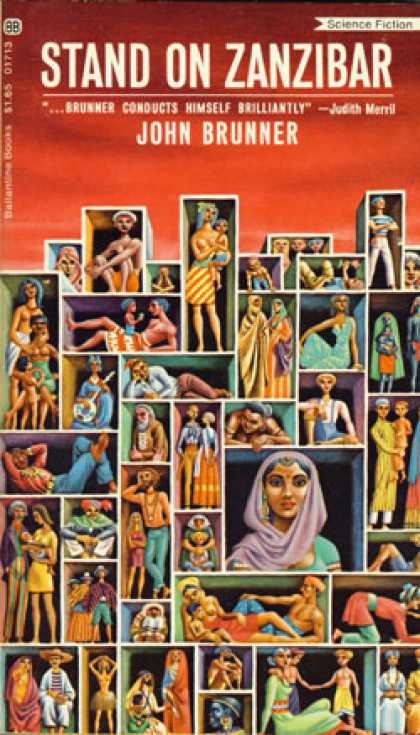
One of John Brunner’s Big Four Futures, a cycle of four big near future novels each set fifty years from the time of their creation.

Looking at my 30 or so published stories, I realized that I write mostly in a sub-genre that I think of as being pioneered by John Brunner in the 70s and made huge by writer’s like William Gibson, Bruce Sterling, Neal Stephenson and Michael Swanwick in the 80s and 90s, when we started calling this stuff cyberpunk.

(Googling “near future SF” and looking at that tag at Goodreads reveals a strange collection of titles, some not near future at all, but perhaps accessible to an audience that doesn’t think they like science fiction? The retro SF fantasy of YA novelist Marissa Meyer for example, who I enjoy…)

Brunner wrote four novels all set 50 years from when he was writing them, which subconsciously influenced my 2067 setting for a recent failed SF romance trilogy… (note to self: cyberpunk is over; near futures are not in vogue)

Limiting extrapolation to transformations not involving robust nano-tech and biohacking makes this ‘SF’ sort of retro-futurist or unnecessarily dense technothriller. Science fiction has moved on from cyberpunk, fracturing into biopunk, nanopunk, and steampunk sub-genres; science fantasy and urban fantasy, with  plenty of old-school SF still being published inspired by half century old space opera franchises (the modern heirs of Asimov’s foundation and Star Trek and Star Wars, which handwave weakly at post humanism in order to tell stories where people still call most of the shots)

Why do I write in this increasingly unpopular genre?

Well, for one thing it avoids the mind-sucking unknowability of the Singularity and post-humanism. Another reason is that I’ve always been fascinated by gadgets and gizmos and tech and new culture coming down the pike that will unfold in our lifetimes. So my techno-fetishism acts as free research for generating this content.

In the 90s I hung out online, and a few times in person, with two groups, the Extropians and the Cypherpunks, ultra-right, libertarian software developers mostly, Ayn Randians. They had created this organized body of thought about tech and a future built around cryptography and the beloved ever-shrinking-government-small-enough-to-drown-in-a-bathtub. This Extropian thought experiment was conducted mostly in an email list from 1991 to 2006, when the list was closed.

In 2006, the board of directors of the Extropy Institute made a decision to close the organisation, stating that its mission was “essentially completed.”[7]

Extropian culture? You’re soaking in it!

One tech the extropians foresaw would eventually become known as blockchain or bitcoin. The consequences of anonymous interaction facilitated by the net are working themselves out now; from the flurry of fake news that helped elect Donald Trump, to the consequences widespread hacking of weak infrastructure, as in the leaked emails that helped elect Donald Trump, the cypherpunks and extropians explored the often horrific consequences of their coming stateless utopia with a kind of savage glee. They didn’t foresee social media exactly, but they saw a shit load of chaos coming down the internet pike.

As a lifelong progressive, I found the extrapolation challenging; oftentimes nauseating, truth be told. In many ways, as with Gibson, I was seeing the distorted echoes of the regressive era we’re now struggling through; a world of savage income quality and breakneck privatization. (Vast winner take-all-players dominating this world wasn’t part of the libertarian canon, of course, but Extropian’s generally shrugged at this, preferring corporate oligopoly to Big Statism.)

At this time, I began a cycle of stories I called BlackNet, based on the ideas of the list as filtered through my own progressive ambivalence. The term blacknet was part of extropian culture, and googling it reveals this little bit of science fiction world building…

BlackNet is nominally nondideological, but considers nation-states, export laws, patent laws, national security considerations and the like to be relics of the pre-cyberspace era. Export and patent laws are often used to explicity project national power and imperialist, colonialist state fascism. BlackNet believes it is solely the responsibility of a secret
holder to keep that secret–not the responsibilty of the State, or of us,
or of anyone else who may come into possession of that secret. If a
secret’s worth having, it’s worth protecting.
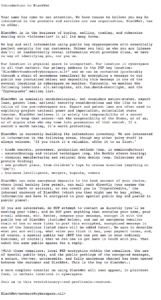
Blacknet manifesto in a glorious monospaced font… back before graphic design dandified the net.

“Blacknet” based services in my cycle of stories were basically people accessing illegal content of various sorts; drugs, weapons, software, tools for 3d printing or fabricating drugs, weapons, etc. I wrote these stories in the 90s, leaving some of them unfinished, and reworked and published several of them in the last five years… the ideas are still mostly current; this stuff is still very much in play.

My Blacknet is now known as a Darknet market. As with any extrapolation, some of the Extropian thought has emerged as real tech (bitcoin, darknet) and some hasn’t caught on. (highly competitive low cost murder-for-hire services, for example.)

I’m still writing Blacknet stories, which are now really technothriller and not SF so much, and generally using the word to gesture at possible but not yet real uses of strong cryptography based products deployed via the net. I’m calling a site which distributes smart contract services to people www.deadmanswitch.com in a work-in-progress…

I need to complete the BlackNet story cycle. It segues into the Zeitgeist Stories, which are my post singularity stories.

Okay, this is a huge topic… sticking a pin it for now. Stay tuned.
I am not the Singularity

I’ve been thinking about the singularity, or post-humanism, using any number of historical and personal anecdotes as metaphors to conjecture wildly about a world that many futurists see thirty years in the future.

Of course, this world has been thirty years away for over thirty years, which isn’t to say it isn’t getting closer, but…

From wikipedia:

In 1965, Good wrote his essay postulating an “intelligence explosion” of recursive self-improvement of a machine intelligence. In 1985, in “The Time Scale of Artificial Intelligence”, artificial intelligence researcher Ray Solomonoff articulated mathematically the related notion of what he called an “infinity point”: if a research community of human-level self-improving AIs take four years to double their own speed, then two years, then one year and so on, their capabilities increase infinitely in finite time.[5][53]

In 1983, Vinge greatly popularized Good’s intelligence explosion in a number of writings, first addressing the topic in print in the January 1983 issue of Omni magazine. In this op-ed piece, Vinge seems to have been the first to use the term “singularity” in a way that was specifically tied to the creation of intelligent machines:[54][55] writing

We will soon create intelligences greater than our own. When this happens, human history will have reached a kind of singularity, an intellectual transition as impenetrable as the knotted space-time at the center of a black hole, and the world will pass far beyond our understanding. This singularity, I believe, already haunts a number of science-fiction writers. It makes realistic extrapolation to an interstellar future impossible. To write a story set more than a century hence, one needs a nuclear war in between … so that the world remains intelligible.

Vinge’s 1993 article “The Coming Technological Singularity: How to Survive in the Post-Human Era”,[6] spread widely on the internet and helped to popularize the idea.[56] This article contains the statement, “Within thirty years, we will have the technological means to create superhuman intelligence. Shortly after, the human era will be ended.” Vinge argues that science-fiction authors cannot write realistic post-singularity characters who surpass the human intellect, as the thoughts of such an intellect would be beyond the ability of humans to express.[6]

Vinge’s essays channelling Good (who I have never heard of until did this cut and paste) hit me hard at the time, and continues to disrupt my ability to write anything but near future SF.

I have loved Asimovian galactic empires, I have loved Niven’s Ringworld and Known Space, but I increasingly struggle with two things. The looming singularity, and the great silence of Fermi’s Paradox. 

The looming singularity fractured SF into various sorts of retro-futurisms, cyberpunk being the near future environment leading up to a singularity, giving way to steampunk and various other kinds of punks. Part of punking out is not worrying too much about super intelligence. Humans remain important. Why? Just because.

Making fun of the singularity, and the various failed deadlines for human scale AI since Marvin Minksy’s original optimistic predictions in the sixties, is now a reflex, even among AI researchers as using neural nets and machine learning stand poised to transform the global economy.

Business people generally are incapable of getting it up for any idea that can’t be monetized in the next business quarter or two, and government people think in terms of an election cycle or two, leaving all deep thought on this subject to hobbyists and cranks, (SF writers) and a tiny number of academics and techno-billionaire funded think tanks.

As I struggle to figure out what to do with my fictional voice, and with my general writing and reasoning ability, I find myself drawn to, and repelled by, transhumanism, the way a thoughtful progressive Christian is appalled by the Rapture.

The passage of time is turning me from a SF writer into a futurist and techno-thriller author. My SFnal voice isn’t appropriate for technothriller, so, I will have to learn a new one. My fictive voice isn’t good for business writing either, so, again, more learning.

This is my bifurcated path, my roadmap for the future.

Thanks for listening. I’ll dig into these more as I do my research.

Stay tuned.

Head Up His Ass

A quick note, some conversational typing, before I go out and do something more substantive, hopefully. I lost a friend, or discovered I’d not had him for years and hadn’t noticed, a few months back, a writer I knew from the nineties, from my first long term workshop, who started flaming me on twitter, saying he couldn’t stand another self-congratulatory post about a magazine sale or some navel-gazing reverie about my process.
“Get your head out of your ass!” he said to me, I thought, with love and affection.

So I chatted with him some, long enough to discover, that any love or affection he’d had for me had long since gone. He blocked me after interacting strangely with a few friends who had attempted to defend me.

I’ve long questioned what the hell I was supposed to be doing with social media, other than screaming about politics, which, as we all know, is mostly useless, but sort of fun and fulfilling in a truly horrible way. I engaged in a conversation on my wall. “I think I need to construct a writer persona, who would be this character, who would write things people would want to read. Reading those posts would make people want to buy my stuff.”

People scoffed. “That’s crazy!” They said. “Be yourself.”

Emboldened by that advice I stuffed my head up my own ass.

A year or two later a successful business person / novelist friend of mine pointed out that he’d never seen so self-sabotaging a social media presence. I was basically furious all the time about stuff. Being myself wasn’t working. At all.

So. What do I talk about?

I can talk about writing and my writing process but with 30 professional short story sales (and two novellas) spread over  the last 20 years, who the hell wants to emulate my process? One of the reasons I stuffed my head up my ass was that I felt like I was a second act, an inspirational tale, and I wanted to share that, without realizing that, to the young people coming out of Clarion who I met at conventions, I was more or a cautionary tale. Like Rip Van Winkle waking up after decades of sleep. (I quit writing fiction for eighteen years.)

I guess, what I am doing and what I have been doing is reaching out to a community, to try to conjure one into being, in one of the most indirect methods imaginable, like writing in sharpie on interstate restroom walls to find friends.

I joined three writing workshops and worked with people on their stuff and made a few friends. I’m not completely alone. One of the reasons I fell into the failed start-up trap was because I wanted a roomful of friends to work with.

In a way Facebook is that roomful of friends. But I can’t be there now. I can’t be that person who is screaming and angry. But I’m not great at being alone, either. I need to get back to my word count, my secondary creation, my process, to the people in my head. And pull my head out of my ass… at the same time.

Lectures… civic engagement… interviews as research… these are the next step. Be in the real world. Find contact there.

Wish me luck.

To Begin Again

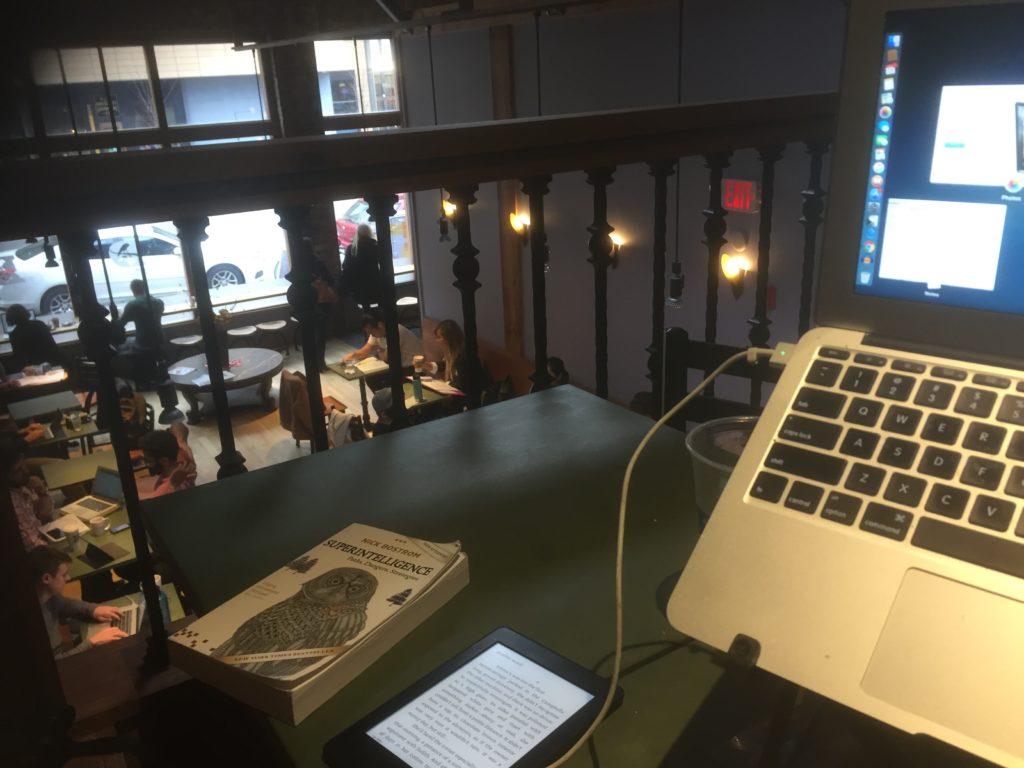
On the second floor platform at Darwin’s near central square. Nice place. Good noise level. Classy music of some sort, blues / jazz, not the usual nostalgia pop.

I’m working at Darwin’s today, a local coffee chain; nice decor, all dark wood and exposed brick, sporting the usual assortment of artisanal ten dollar sandwiches and excellent coffees.

Eighteen years ago I knew the owner’s wife; we both had infant children, and we both had coffee at the 1369 in central square many mornings. I guess she needed a little break from her family coffee shop? I guess that makes sense. I had a little circle of almost friends, for a little while, in central square, while the babies stayed in the carriages.

When you have infant children you suddenly realize that you need to have friends with infant children so you can cultivate friendships and playdates for your kids. As a male primary caregiver, of course, you’re at a disadvantage. Nine out of ten of the people doing the caregiving thing are women, and that ads an alienating layer of complexity. It’s even worse if the woman is ridiculously attractive of course, as this woman was…

I don’t think about that time much. I was giving up on writing, losing myself in the kids in the aftermath of 911 and the collapse of the tech bubble… all those things percolating… Complexities.

I ended up wasting years of my life working for failed start-ups with a series of business partners, making less and less money. Friends wondered why I didn’t start writing again, as I was engaged in pure speculation anyway.

I couldn’t explain why, but mostly, I found it easier to chase someone else’s dream than my own. I made great money in the bubble, and I had that abundance thinking, that anything I gave myself to would eventually work out, as long as it involved the internet and my professional branding and user experience skills.

Heh.

It’s hard to speak of that monstrous optimism without wanting to cry. The Wired magazine cover story titled The Long Boom said it all–the idea was that the internet would fuel a revolutionary change in the economy which would transcend the business cycle, which would become like that Escher print of the staircase that loops endlessly upward.

The tech boom was going to go on forever.

Oh, it was a time of win win. No losers! Can you imagine that? Sure most of the money went to a very few, but during the 90s the rising tide did raise all ships, event the beat up shitty ones, a tiny bit. For awhile. Until we found ourselves somersaulting every downward on that Escher staircase, through the dust and flames of collapsing towers.

Fast forward eighteen years. My kids are teenagers, smiling and waving as they make their way into the world. I’m working on my own dreams this time around, and will own completely any success or failure I find.

I’ve cut myself off of Facebook and twitter and I’m mostly alone. My writing friends scattered over the world. Only a few business relationships survived the collapse of my failed start-ups. Immediate family hundreds or a thousand miles away.

Lise’s baby (was her name Lise?)  must be 18 now too—babies age at a uniform rate. Kid time is over. No more kid movies and kid books and going to parks and pools together. No more kid music on the car stereo. No more bathtoys underfoot. No more kraft macaroni and cheese and dinosaur shaped chicken nuggets. No more happy meals and happy meal toys.

No more reading to them at night.

Eighteen years after your last kid is born, you get your life back. It’s like this thing your ordered on Amazon and forgot you wanted, it just shows up on your doorstep and you open it up and say, “Oh!”

There it is.

Your life, halfway over, to begin again.


News Poisoning

Everybody knows what food poisoning feels like. Two exits; no waiting. Retching, dry heaves, misery, which you know will resolve in a day or two most likely.

Since the election, many creative people have been suffering from News poisoning, with mental effect of a similar nature; the problem is the source of the poison isn’t going away anytime soon.

I know some people who have put their creative lives on hold to be more politically active. I know those who have decided to take a step back from current events and continue to work in their creative careers.

And of course, many many people struggling to do both at once, and feeling torn up about it. They aren’t active enough, or their work is suffering, taking a back seat to the burning need of the resistance.

Successful artists can afford to wear their heart on their sleeves. Stephen King is free to speak his mind, but as a fledgling SF author, to speak out on politics costs you some fraction of your audience; adult SF is a small audience to start out with, when compared to many genres (YA, Romance, Mass Market Thrillers) and slicing that readership in half out of the gate feels self-sabotaging.

I’ve worked as an unpaid, Krugman-esque op ed writer in social media for decades now. Inhaling news, and exhaling commentary, building a following of a few thousand, and losing it again as my interest waxed and waned. I’m Krugman, without the Nobel Prize, which is to say, I’m nothing like Krugman.

I’m more like a sports fan who thinks he could be a radio color commentator, but who has never had that gig a day in his life. My efforts to monetize this work have generated a little money, not much, but then, my fiction writing hasn’t made much either.

One wants to combine all of one’s selves into one unified force and punch through to success, to victory; but one fears that mixing one’s politics with one’s fiction will result in unpublishable message stories, half-assed polemic.

Writing dystopia’s feels a little on the nose; writing rosy futures feels absurd. Secondary creations which sidestep the moment feel irrelevant. Letting the climate kill your creative life feels like giving up.

My only way through it, is to try to do more, and talk less about it. Take the time I used to spend mulling politics, use it to advocate for the things I believe in (science, fairness, equality, the environment) and keep on keeping on.

So far, it’s not working. The world swirls around me. I struggle not to hate the 27% of the country who have plunged the world into chaos, and the 73% who let them, myself included. I struggle to believe in a decent future, as the extrapolation machine in my brain sees untold misery unfolding over the next few decades.

I believe in a 73% solution. That the 73% who didn’t vote for chaos can eventually lead us away from a looming world of environmental disaster and massive human die offs. I give money and time to the 73%.

but talking about it… as I’m doing now? Why don’t I stop doing that and write?

Why?

One thing at a time, maybe. Learn to read like I was fourteen again; then maybe I’ll be able to focus on my creative work like I was twenty five.


To Read Like I was Fourteen Again

I’m two here I think, but you can see I’m planning on becoming a troubled nerd.

I hated middle-school with a burning passion. I have never been, before or since, that unhappy.

That unhappiness had an upside; I could read a book a day. The ability lasted for several years, say, a thousand books. I escaped into books, which were mostly science fiction and fantasy, but also some historical fiction, some literary fiction, some of that stuff blurs categories, and some non-fiction. Before middle-school I’d read comics, but I couldn’t buy them fast enough to keep me distracted from my daily misery as a 6th, 7th and 8th grader.

Forty years later, I find myself wanting to read like that again. And I can’t, or at least, I haven’ figured it out, yet. So I thought I’d list some of the reasons I read like a demone then, and think through some answers.

  1. I had three channels of network TV, and a blurry PBS, on a set I shared with at least two people. (We had two TVs for a family of four.)
  2. We had no video games.
  3. We had no VCR or way to see movies other than going to the theater.
  4. We had no second run theaters; you could only see the movies that were out at that moment.
  5. I hated all sports.
  6. I had yet to become interested in politics or acquired a newspaper habit.
  7. I had a handful of bookish friends who had other sedate pursuits (model building, drawing, role playing gaming). We hung out often, but there was no way to even talk to them after say, ten o’clock.
  8. Because we had one phone till I was in high school.

In short, what the hell else was there for me to do?

Don’t get me wrong, I watched plenty of TV. But there were blocks of time when there was nothing on the three channels I could even pretend to be interested in.

What the hell else was there to do?

Play cards and board games? Did that a little. Smoke pot drink beer and listen to vinyl and cassettes? Wouldn’t do that until I was older.

To summarize: It was easier to read a shitload, back then, because we had very very little else to do.

We roamed freely… through undeveloped land and construction sites and junkyards, climbing hills to hang out near water towers, and we went to lakes and played frisbee, a bit, my only sport, and we swam in pools and lakes, sure, a bit of that, a bit of travel, a bit of mall-wandering.

But books filled endless vistas of unstructured time, like water seeking a level, soaking into every nook and cranny, ever crevice.

To read like I was fourteen again I need to turn away from a world of video, from a new golden age of television, from the unwatched movies of the last century, of which there are literally thousands of classics, and ten thousand guilty pleasures, from gaming both casual and profound, from politics and news and social media and activism and the needs of a body which demands exercise to not hurt.

Tools which help.

  1. Social media blockers like Freedom.
  2. E-readers and e-reading apps on smart phones.
  3. Audiobooks to listen to while walking.
  4. On-line communities to talk about books with.

Finally, and sadly, perhaps the biggest incentive to read again, is this. A world I want to escape from.

Badly.

Attracting Attention to Yourself

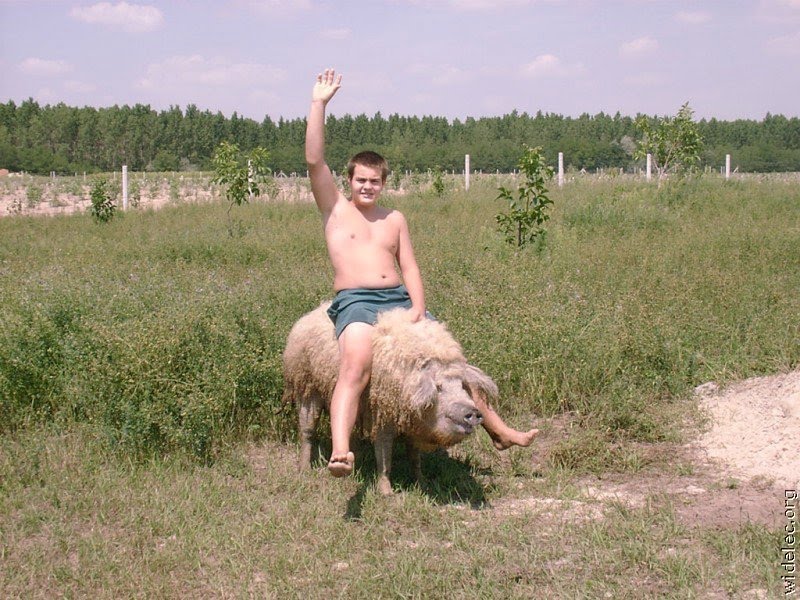
Random image of a kid riding a hog.

When I was in college in the 80s we had a friend named Joe, a guy of Italian extraction from New Jersey; short, muscular, with a harpo-marx hairdo and a devilish smile, quiet but with a wicked and odd sense of humor. I had the sense that he’d never been popular where he came from, but we found him delightful.

And, we egged him on.

So, he was the guy who, at the dining hall, would drink weird concoctions of things you would mix up; soda, milk, yogurt, pudding, hot-sauce…

My roommate had had cousins in Europe, and while visiting their farm as a little kid, he had egged his cousin on, making him ride farm animals, which of course, he wasn’t supposed to do.

“Ride the hog! Ride the hog!”

We were fond of that story, and when we egged Joe on, we’d invoke it, “Ride the hog Joe! Ride the Hog!”

Hours later sometimes, Joe would pull a face and put his hand on his stomach and shake his head. We’d laugh. Hard. And clap him on the back and show him he was ours, we loved him. We were kids away from home for the first time trying to make friends and figure out who we were, when we could be anything we wanted. Oh, and secondarily, we tried not to flunk out of school.

While talking to a friend about why I’ve never been able to land a pro position and do panels at my local SF cons, he mentioned, well, probably better if you haven’t FB friended them, if you want to do that, and I realized, oh.

If you channel a certain kind of political outrage and pain, your posts get shared, and you make friends, people happy to read what you write, as my roommate was happy to watch his cousin watch the hog rider, and we were happy to watch Joe drink simulated vomit, which we mixed up for him.

Like all scary things, it’s a feedback loop, of transgression and attention. Like watching the reality TV stars famous for being famous, famous for being drunk. Everybody is a grown up. Everyone has free will. Everyone is presumed to be doing what they want to do. But something in the mix isn’t quite right.

Social media has created an entire social class of free op-ed writers, generating really lovely pieces mixing the personal and political; they have only a few things in common. Their positions are extreme, and the only people who make a dime off of their work product are tech billionaires who build the platforms they entertain people on.

I’ve been using Freedom for about six weeks now. The insights keep coming, as to what I’ve been doing with social media, and why. I’m getting off the hog. I want to keep writing, keep emoting into keyboards, but this isn’t the way to do it, really. I’ve been fucking around in the dorms with my friends now for decades. Time to graduate; grow up, and get on with it.

To those that have clapped me on the back, I know you have done that with love, and I thank you for it. I hope to carry you into my voice in other ways in the future, but if we part company here, there are no ill feelings, and no regrets.

We’re all grown ups. I chose to ride that hog.

And now, to stop.


The Joy of Writing

Just a quick note, before I go for my walk and sit at my cafe and get some words down, on how happy I am to have had the time in my life for writing, and how much I appreciate the community of people that have worked on, published, and read my work.

Even though, in a real sense, the writing is its own reward, minus all those things. Writing, when it’s going well, is flow.

You’ve heard of flow, right? Here’s the wikipedia definition:

Jeanne Nakamura and Csíkszentmihályi identify the following six factors as encompassing an experience of flow.[2]

  1. Intense and focused concentration on the present moment
    Merging of action and awareness
  2. A loss of reflective self-consciousness
  3. A sense of personal control or agency over the situation or activity
  4. A distortion of temporal experience, one’s subjective experience of time is altered
  5. Experience of the activity as intrinsically rewarding, also referred to as autotelic experience

Those aspects can appear independently of each other, but only in combination do they constitute a so-called flow experience. Additionally, psychology expert, Kendra Cherry, has mentioned three other components that Csíkszentmihályi lists as being a part of the flow experience:[3]

  1. “Immediate feedback”[3]
  2. Feeling that you have the potential to succeed
  3. Feeling so engrossed in the experience, that other needs become negligible

Writing, when it’s going well, releases you from the annoyance of being yourself. Self dissolves, even as that self experiences a sense of control. For me, and for a lot of writers, feeling that potential to succeed is the hardest part, because, quite simply, there’s a lot of rejection and failure in the writing experience.

  1. You want to sell what you write.
  2. You want people to love it and write you and tell you they do.
  3. You want money for it. Enough to live on.
  4. You want to win awards, if you like to read award winning fiction.
  5. You want the sense that your work has some lasting value or impact, at some level.

A full time decade of effort in, spread over the last 3 decades, I’m hovering around 1 and 2, still, and I’m trying to be cool with the idea that this is what I get. I get to sell some sizable fraction of what I write, and I get to have a few people tell me that they like it a lot.

Achieving three to five in the list above feels so far away. Impossible, really.

But I know now, that I am capable of experiencing the joy of flow; the joy of writing, which is a kind of payment in itself. I can believe, at some level, at some times, in 3, 4, and… well. Not five.

But oh, just to get to 3 would be amazing.

But here is to flow, the joyous death of oneself in story, to hearing voices and seeing things in your head that make you gasp with surprise, tremble with joy, that make you weep in despair; to experiences you create and transmit through the continuous and vivid waking dream of prose.

To writing! To story!

To the infinite untapped possibility trapped in every human mind…

To every story waiting to be discovered, excavated, mined, polished and presented…

To the jungle dark, but full of diamonds.

Breaking a habit; making new ones… in a world gone mad

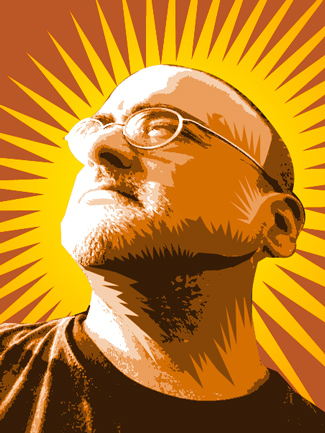
Portrait Illo of me that hides to some degree my bald middle-aged thing. Obama-esque style triggers right-wingers and makes them send me hate mail.

One of the things you can do, if you want to, as a human being, is read books about how to be a better human being.

My mix of ego and fatalism, mild-bipolar, and generalized cynicism has kept me from doing the self help thing. Only when I hit rock bottom am I really willing to consider that maybe I don’t know what I’m doing. Which on the face of it, is stunningly obvious.

So there are the hero biographies, and the self-help books about Very Successful People, that tell you what they’re doing, that you obviously aren’t. And theres a ton of overlap, consensus, in these books. I guess you’ve all read a few of them? If not, go do that. You really should, even if you ignore them. Self help. Go.

I’ll wait here. Okay. So you read a few? Good.

The last one I read was Deep Work, by Cal Newport, a guy who is amazingly better than I am in pretty much every way, except I’m more self-deprecating. Cal is an amazing guy. While mostly venerating the successful, (he’s fond of nobel prize winners and billionaires) he politely suggests that the entire world of software connectivity productivity open office constant interruption culture is bug fuck crazy and successful people learn how to shut it off and back away from distraction to actually think. 

Every writer who has had even a whisper of success has a little frozen banana stand where they sell you the secret to their awesome, rich and fulfilling creative lives. That you need, because you’re a little worm who can’t finish his novel. Or short story. Or even start to write one. Or do whatever it is, you really want to do, something you thought about before the world tapped you on the shoulder and whispered in your ear, “money, dude. health insurance. Living indoors.”

I’ll summarize ten thousand of these things in a single bullet point.

  • Success is made of habits. Willpower makes habits. Habits make success. (Willpower doesn’t make success directly; nobody has enough of it. Especially not you. Worm.)

At the Freedom blog, the people who make my blocking software, because yeah, now I’m a person who uses blocking software, they had an essay recently saying that the 21 days to a new habit thing is way too short; habits are harder to make than that. The blog also said, you can probably only work on one thing at a time.

So after the election, I noticed something, in my circle of mostly progressive type friends. All of us started to quickly lose our minds, as we shared article after article. We began to tell each other, ‘avoid the red meat, the little bit of news with a lot of attitude sites, that just make us crazy, let’s stick to actual news.’

The problem was, the actual news was… just as bad.

All of us had constructed this virtual news feed, where we chucked the stuff that we felt we all needed to know. The hard stuff. That started to make us super depressed. People pleaded for kittens and photos of tasty lunches and sunsets.

Then people started just posting stuff about things to DO. Because maybe doing things would help. So people did the things. They opposed people… who are all being confirmed. They went to protests. We all were calling our reps. Maybe this was all a good thing, part of a political awakening which stands a chance of heading off a fascist coup. Who knows.

But the countercurrents were there, too. Some more bullets.

  • Art is important. That Winston Churchill quote. Art is radical. Even if it isn’t political. Woody Guthries’s guitar sticker that read, ‘this machine kills fascists.’
  • Art is sort of self indulgent, now, though, don’t you think? Shouldn’t we die in the protests?
  • Self care is important. If you are dead or insane from grief, you’re less effective. So take care of yourself. Detach some. Enjoy life and family. Smell some roses.
  • Rich privileged white people who aren’t targeted are full of shit for talking about self-care. Fuck them. Work harder. Worms.

During all this, I promised myself a few things. Which led to the blocking software.

  1. Stop generating free op-ed for a few hundred strangers to enrich Mark Zuckerberg.
  2. Re-learn how to focus for long periods of time again. As a goddamn eight year old I could play with fucking legos for five or six hours straight, with the occasional glass of Tang or Hawaiian Punch. Dear God. I need the attention span I had when I was eight. 
  3. Do more politically. By actually doing something more effective and important than the free op-ed. Such a low bar!
  4. Keep becoming a writer who has a real audience that buys my stuff, instead of a dude ranting on a street corner that people who wait for the bus watch because he’s there.

Social media, the party that never ends, was the low hanging fruit, the biggest target. I took aim. I fired. My gun was a 14 hour block… then a 23 hour block. On all devices, using the industrial strength VPN style blocking  of Freedom software.

I’m three weeks in. Status report:

  1. Attention span so far isn’t improving. I’m less productive, so far, as I am ‘self caring’ a lot and accomplishing little goal oriented activity.
  2. I’m less unhappy, by external reports.
  3. I can see now, when I peek my head into the social media party, that everyone in there is basically going nuts. The people that aren’t look weird. Like, why the hell aren’t they going crazy?

The news still gets to me; sometimes hours late. I read the NYT a bit, but there’s no passion to it, when you can’t share it with your 1000 people. I’m trying to remember how I used to play with legos for hours on end.

Well. The Freedom blog said, ‘one thing at a time, and it takes a long time.’

So. Social media, the habit? It’s breaking. I missed my one hour window yesterday. I was busy. true, I was watching TV with my teenage son, not like I was curing cancer, but still.

I have to think this is progress.

My family donated a fair amount of money to the causes we believe in, and I get emails daily on how the world is going to hell, which I skim. I’ll call my reps, now and then. I’ll send money. I’ll go to the protests. But I can’t live in that state of sadness and outrage 24/7, or I’ll die. And they’ll win.

Yeah. I’m a privileged asshole.

I’m gonna have to live with that too.

Social Media Exile

My ‘Freedom’ control panel, blocking social media and other sites on all devices 23 hours a day. Because yeah, i need this.

Social media lets you hold onto people who you’ve left behind.

They move, or you move, and in the old days, there were two options. Well, three. One, you never saw or spoke to them again, if you were casually friends. Two, you made a few calls or visits, maybe, and then, fell out of touch–forever. Or, rarely, you kept up with them, and they with you, by spending time, and or money. Long distance was no joke. You might have twenty, forty, fifty dollar conversations with your vanished friend. This wasn’t something done casually. Spending that money represented a kind of hunger, a real connection, for each other.

Long distance got cheaper and cheaper and cheaper, and was finally free bundled in with whatever internet product you paid for, the internet bloomed, social media happened; skype and facetime happened,  and it became effortless to maintain a slender connection to everyone with whom you have ever had the slightest feelings for.

Ex girlfriends. People you did workshops with in the 90s. High-school friends and high-school enemies, college friends, work friends, writing friends. All those little tendrils of contact wrap you in the illusion of friendship and community, or rather, give you that community, minus the fleshy component, of faces and food and drink and touching and smelling each other.

Make a few hundred such friends, and scatter them to the winds, and you have a party that never ends. Kind of cerebral and sedate, as people open magical doors from jobs and houses thousands of miles away, jot a note on a scrap of paper, stick it to the wall and then disappear again. But the notes keep piling up. Some of the notes are nothing, newspaper clippings, restaurant receipts, form letters, come-ons for causes, jokes and recipes and pointers to things for which there are no convenient concrete metaphors. (Magic keyholes through which one can glimpse kittens falling off of vanitys? Mix tapes? TV guide pages?)

It’s not that great a party. Every now and then, you meet someone new, someone says, “you would like this person,” and you friend them, because why not?

Robots will want to hook up with you at this party, and you learn to ignore them. And rarely real people too, who you learn to ignore too, if you’re married, or not interested, or both.

Still. It’s a party.

My problem is that I’d rather go to the world’s shittiest party than do pretty much anything else.

So I upped my social media blocking game, to twenty three hours a day, seven days a week. I use the program Freedom on all my devices. The lingering remnants of a lifetime of friendships torn away, I find I am mostly alone in my city now, with a handful of people I’m close to. My kids recede away into their teenage lives.

A friend of mine from Woodstock tells me I need to do meetups. I have a few local friends, from a meetup I used to do…

I know a barrista, at my cafe, and I talk to him some.

Eventually, I guess, I get so lonely I make new friends in meatspace?

We will see how that works.